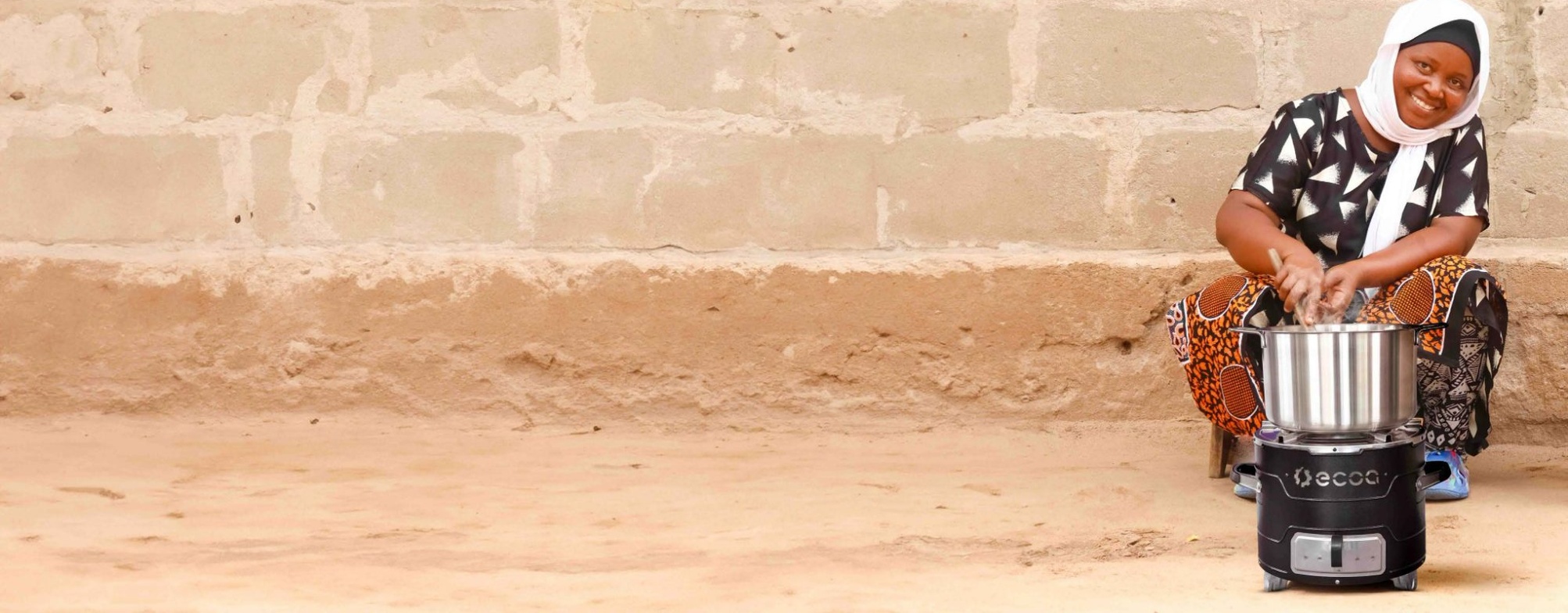
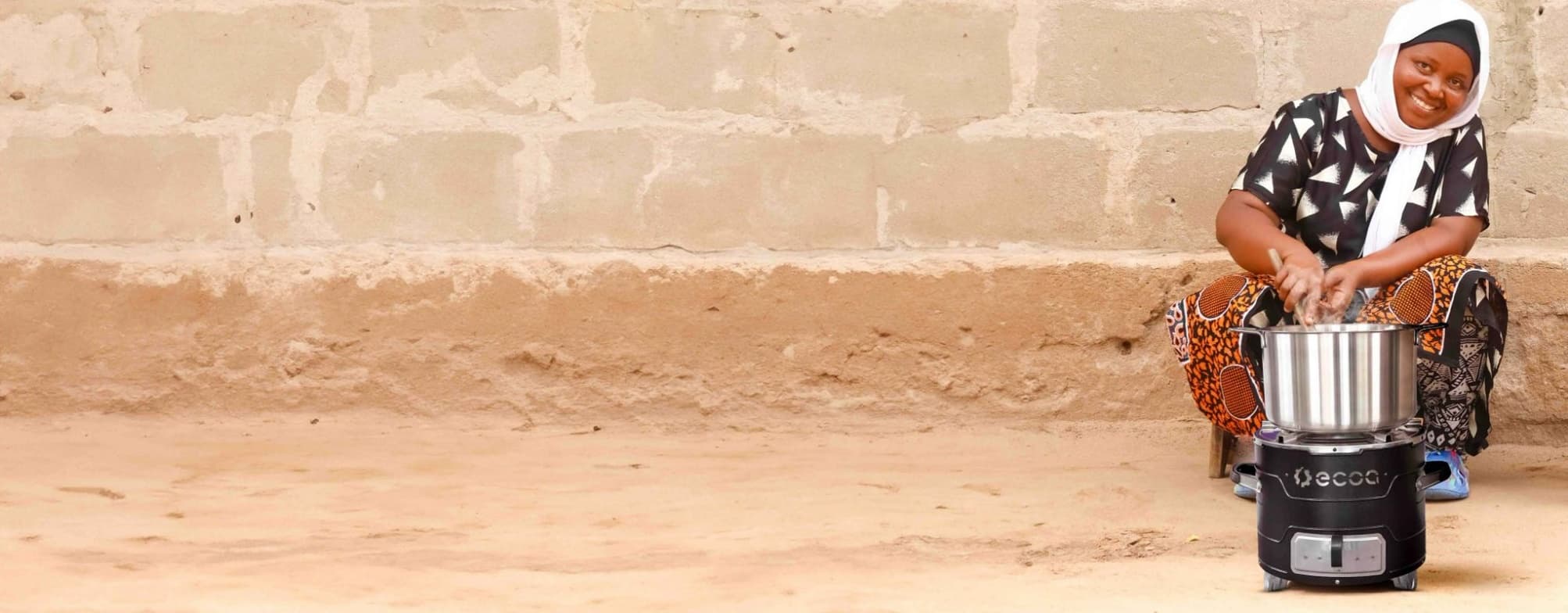
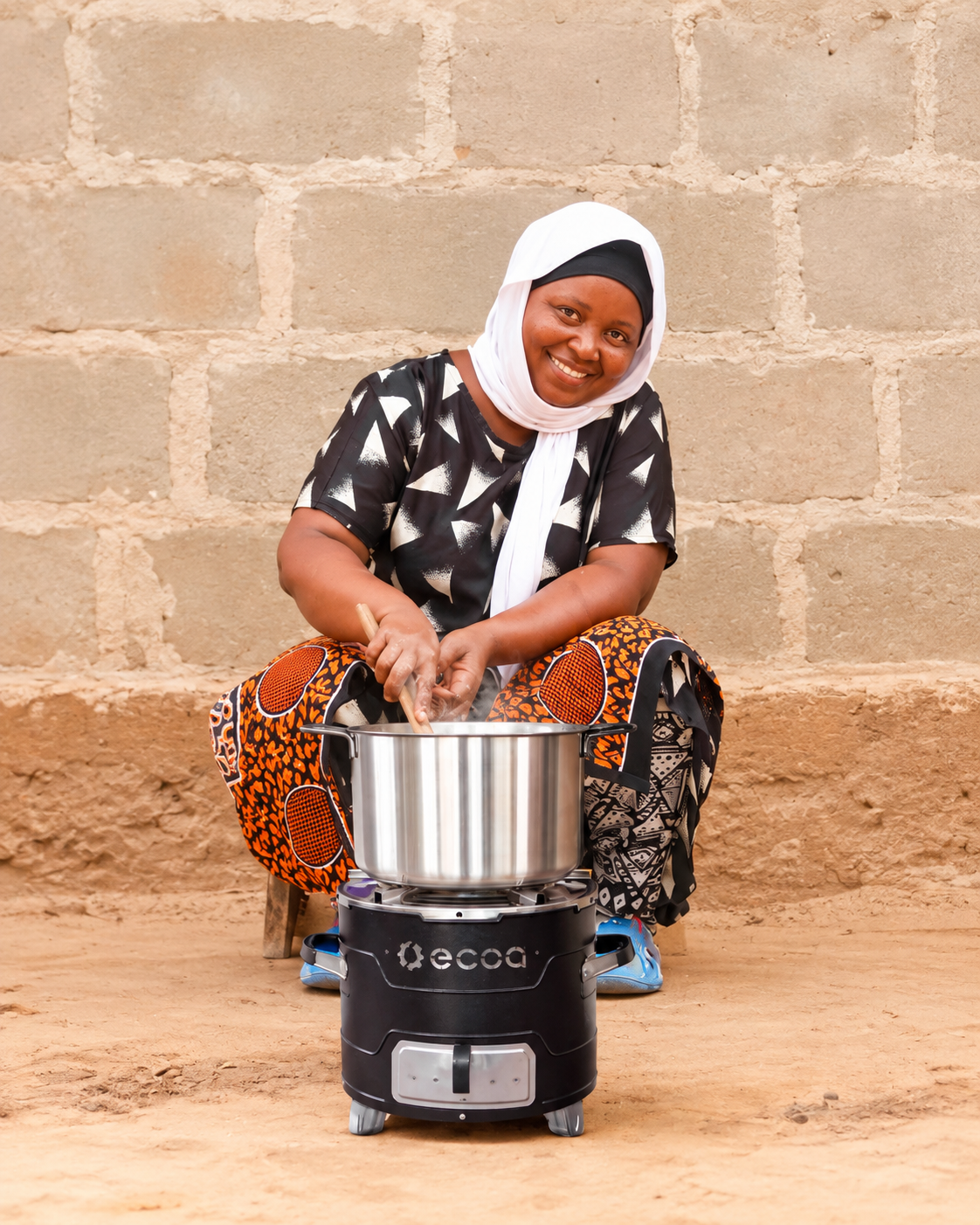
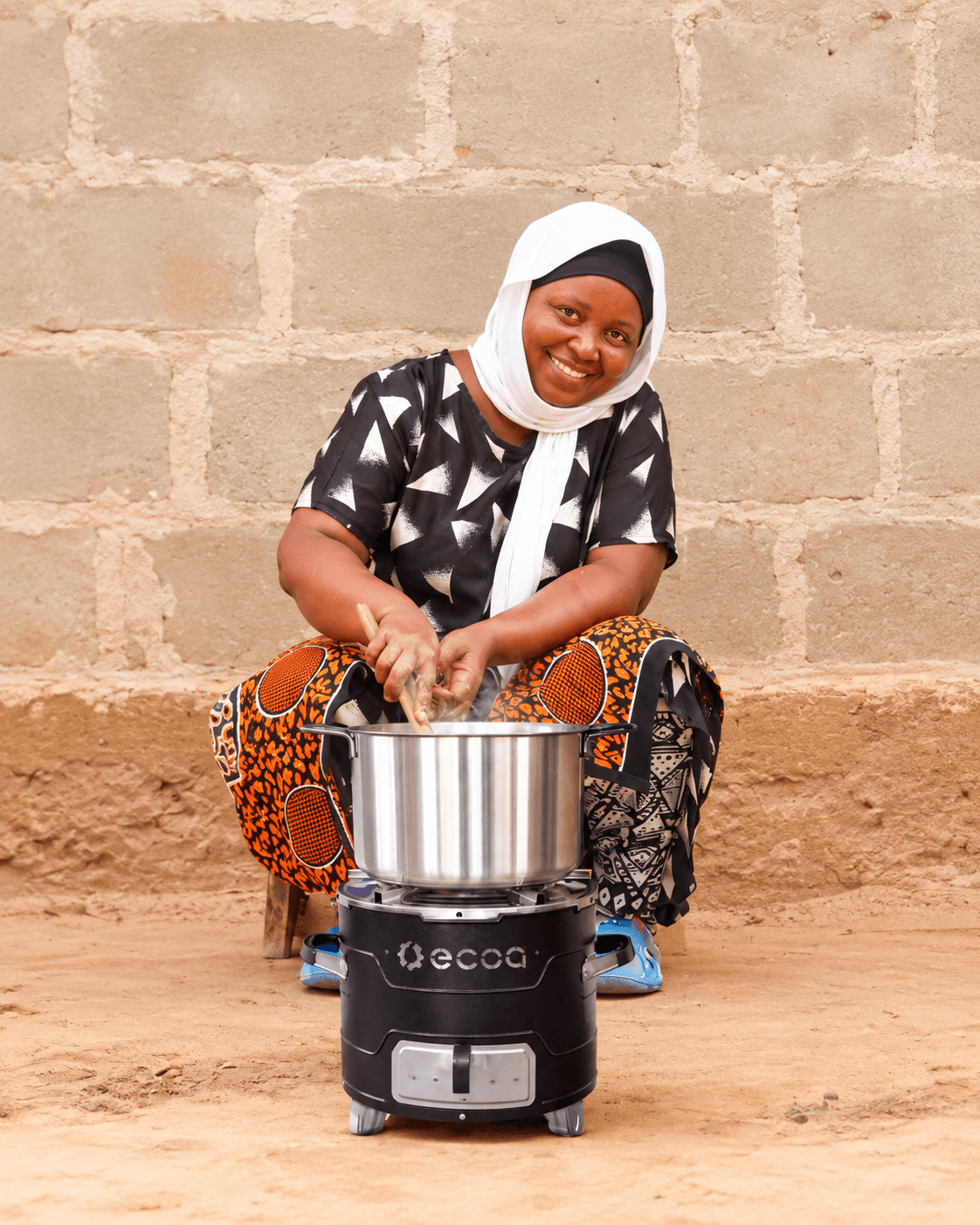
Study shows cookstoves among the world's most effective climate interventions
Researchers at the Wharton School of the University of Pennsylvania and the University of Chicago Booth School of Business ran a three-year randomised controlled trial with 955 Nairobi households, putting a hard number on what BURN's ECOA Char actually delivers.
Clean cooking deserves a bigger share of climate finance body
The study puts clean cooking among the most cost-effective climate interventions ever measured, and it does so with three years of real household data rather than models. One intervention delivers three results at once: lower household fuel spend, technology that stays in daily use, and emissions reductions you can measure.
It also shows how far climate finance goes here. A modest subsidy clears the upfront cost, and the household keeps the fuel savings and the abatement for years afterwards.
Lower household fuel consumption
Charcoal is bought in cash, week after week, so a more efficient stove lands first as money stayed in the household budget. BURN's own monitoring records a 43% average reduction in charcoal use, the mechanism behind the abatement the trial measured.
Sustained technology adoption
At three and a half years, 83% of the stoves were still in service. That durability is what allows a single subsidised purchase to keep delivering fuel savings and abatement years after it was made, and it is measured rather than assumed.
Measurable emissions reductions
Each adopting household avoided roughly 1.7 tonnes of CO₂e a year, measured from what families actually burned over three years rather than modelled from laboratory efficiency. The same intervention produces the fuel saving, the sustained use and the abatement together.
Numbers that matter
Researchers at the University of Chicago and the University of Pennsylvania followed 955 households in Nairobi for more than three years, tracking both adoption and real charcoal use.
What they found, next to our own monitoring
The third column is BURN's internal monitoring, shown for comparison, not part of the study.
Reduction in charcoal consumption against a traditional stove
379 kg less charcoal a year against a 969 kg baseline; 27–48% across all measures
average reduction, BURN Kenya portfolio monitoring
Household fuel spend avoided each year
saved in year one, US$78 a year after, totalling US$284 over 3.1 years of ownership
fuel spend avoided per household / yr, BURN published figure
Per adopting household, per year
CO2e / household / yr
CO2e / household / yr
At 3.5 years after purchase
of stoves in use
active use, BURN monitoring
Reduction in charcoal consumption against a traditional stove
379 kg less charcoal a year against a 969 kg baseline; 27–48% across all measures
average reduction, BURN Kenya portfolio monitoring
Household fuel spend avoided each year
saved in year one, US$78 a year after, totalling US$284 over 3.1 years of ownership
fuel spend avoided per household / yr, BURN published figure
Per adopting household, per year
CO2e / household / yr
CO2e / household / yr
At 3.5 years after purchase
of stoves in use
active use, BURN monitoring
Study figures as reported by Berkouwer and Dean. BURN figures from our portfolio monitoring, collected under our carbon project methodology. Produced independently, by different methods, landing in the same range.
Move the slider of dollars deployed to see the carbon avoided.
Same climate finance, three places to put it. Each bar is the tonnes of CO2e that budget abates, using the subsidy cost per tonne the study reports for each intervention.


at $7 of subsidy per tonne CO2e abated, the study's central estimate


at $1,356 of subsidy per tonne CO2e (Hahn et al., 2024), a sliver of the stove bar on the same money


at $237 of subsidy per tonne CO2e (Hahn et al., 2024)
Illustrative. Stove figure uses the study's $7 subsidy per tonne CO2e abated; vehicle and solar figures use published external subsidy costs per tonne, not BURN data. Not a forecast of programme outcomes.
What the study confirmed, and where we build on it
The findings validated the core of what we build. They also point to where the next gains are. Both readings are ours.
The stoves stayed in service
83% still in use at three and a half years. This is the finding that most directly answers the sector's durability critique.
Savings were measured, not modelled
Fuel consumption was tracked repeatedly over three years rather than surveyed once, which is a higher evidence standard than much of the sector uses.
Additionality was tested by design
Randomised subsidy levels turned an argument about counterfactuals into a measurement.
Our own monitoring agrees
Independent findings and our own monitoring land in the same range, produced by entirely different methods. That convergence is the strongest validation in the paper.
Subsidy is what unlocks adoption
Take-up rose sharply with subsidy, which is precisely why carbon finance works here: a small amount of support converts directly into households adopting and keeping a better stove. Reaching the next cohort means keeping that support flowing.
Room to improve for adoption
83% after three and a half years is a strong result, and we are pushing it higher. The stoves tested here are an earlier generation. BURN has kept updating its models since, and today's build longer-lasting.
Residual stacking
Households already cut charcoal by around 39% on average. A home cooking everything on the ECOA Char can reach closer to 50%, so our behaviour-change work is aimed squarely at closing that remaining gap.
Longer horizons are unmeasured
The stoves were still going strong when the trial ended, so the obvious next step is a follow-up study tracking these same customers past three and a half years.
What it adds to the integrity conversation
Five contested topics. Where the study speaks to one, we say how. Where it doesn't, we say that too.
Do households keep burning charcoal on the old stove?
Crediting methodologies often assume a household switches over completely. Critics argue that in practice the old jiko stays in the corner and gets used alongside the new stove, so the fuel savings on paper overstate what actually happens in the kitchen.
The study did not assume a switch. It tracked charcoal purchases with surveys every three days across three years, so whatever households burned on any stove is inside the number. Consumption fell by 379 kg a year against a 969 kg baseline, about 39%, and the estimate held between 27% and 48% across every measurement method the authors used. Stacking is not a deduction still to be made. It is already priced into that figure.
Go straight to the source
The strongest way to understand these findings is the paper itself: its methodology, its data and the evidence behind every number on this page.
Read the full study

Susanna Berkouwer
University of PennsylvaniaAssistant Professor of Business Economics and Public Policy at the Wharton School, and a faculty affiliate of the Kleinman Center for Energy Policy. Her research covers energy and environmental economics in low-income countries.


Joshua Dean
University of ChicagoAssistant Professor of Behavioral Science and Economics at the Booth School of Business, working on how households in developing countries make decisions about energy, technology and human capital.