
News
What BURN's Independent Carbon Ratings Reveal About the Future of High-Integrity Credits
BURN's clean cooking carbon projects have been independently assessed by leading ratings agencies, including BeZero, Calyx, and Sylvera.

High-quality carbon credits have a new role to play in corporate climate action.
The Science Based Targets initiative's (SBTi) Corporate Net-Zero Standard V2.0 formally recognises the role of high-quality carbon credits for the first time. For companies committed to science-based targets, this represents a significant shift in how climate action beyond the value chain can be approached.
While direct emissions reductions remain the priority, the draft standard acknowledges that companies can play a meaningful role in financing climate action outside their operations through the use of high-integrity carbon credits.
A Shift in Corporate Climate Strategy
For many years, the relationship between science-based targets and carbon credits was often viewed as separate. Companies were expected to focus on reducing emissions within their own operations and value chains, while carbon credits largely sat outside formal target-setting frameworks.
SBTi V2.0 signals a more nuanced approach.
The proposed standard recognises that companies can contribute to global climate goals by investing in mitigation activities beyond their value chains, provided those activities are credible, measurable, and deliver genuine climate impact.
Why Carbon Credit Quality Matters
Not all carbon credits are created equal.
As carbon markets mature, buyers are placing increasing emphasis on quality, transparency, and evidence. They want confidence that projects deliver real emissions reductions, generate measurable outcomes, and withstand independent scrutiny.
This has increased the importance of:
The focus is no longer simply on purchasing credits. It is on understanding the impact behind them.
What This Means for Buyers
For companies pursuing science-based climate targets, the emergence of SBTi V2.0 creates an opportunity to think more strategically about climate finance.
High-integrity carbon credits can help channel investment into projects that deliver measurable environmental and social outcomes while supporting broader climate goals.
Projects that combine strong technology, rigorous monitoring, transparent reporting, and independent assessment are likely to become increasingly important as buyers seek greater confidence in the credits they purchase.
The Opportunity for Clean Cooking
Clean cooking projects are particularly well positioned to contribute to this evolving landscape.
When designed and implemented effectively, they can deliver measurable emissions reductions while generating significant co-benefits, including improved health outcomes, reduced household fuel costs, and increased resilience for communities.
As demand for high-quality climate finance grows, projects that can demonstrate both impact and integrity will be best placed to meet buyer expectations.
Looking Ahead
SBTi V2.0 does not replace the need for ambitious emissions reductions. Rather, it expands the conversation around how companies can support climate action beyond their own value chains.
For organisations committed to science-based targets, the message is clear: climate leadership is no longer defined solely by what a company reduces internally, but also by how it helps accelerate climate solutions globally.
The companies that move first will be those that recognise the value of investing in high-integrity projects capable of delivering measurable, verifiable, and lasting impact.
Secure Your CCP-Labelled Cookstove Credits Before the Market Catches Up
As demand for high-integrity carbon credits continues to grow, access to high-quality supply is becoming increasingly important.
We work directly with SBTi-committed companies to source, retire, and document CCP-labelled cookstove credits that align with the requirements outlined in the Corporate Net-Zero Standard V2.0. Our team can help you understand your Beyond Value Chain Mitigation (BVCM) and Ongoing Emissions Recognition (OER) obligations, model the appropriate credit volumes for your target recognition tier, and access verified supply today.
Whether you are exploring your first OER strategy or scaling an existing climate finance programme, we can help you navigate the evolving carbon market with confidence.
→ Contact us to discuss your OER portfolio and secure access to high-integrity cookstove credits.
BURN's clean cooking carbon projects have been independently assessed by leading ratings agencies, including BeZero, Calyx, and Sylvera.

At BURN, we are continuing to build one of the most advanced clean cooking carbon portfolios in Africa, with a growing number of Letters of Approval (LOAs) issued under Article 6.2 of the Paris Agreement, authorizing the transfer of carbon credits between countries, secured across key markets

At BURN, we have spent the past two years preparing a robust supply of CP1 credits, with the goal of providing a credible and impactful pathway for carbon offset buyers.
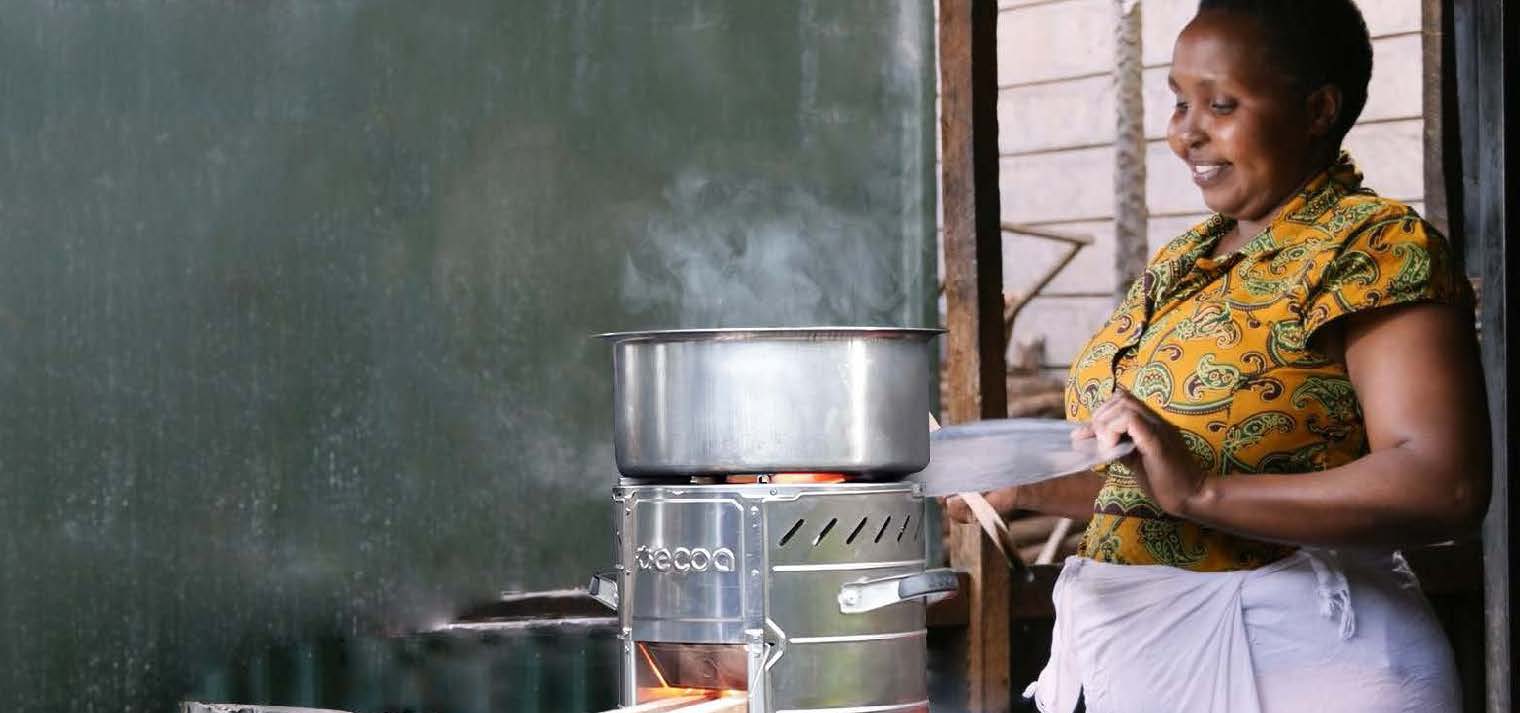
At sunrise in rural Kenya, a Kuniokoa cookstove is already in use. A family prepares tea without thick smoke filling the room, using far less firewood than they once did.

BURN's clean cooking carbon projects have been independently assessed by leading ratings agencies, including BeZero, Calyx, and Sylvera.

At BURN, we are continuing to build one of the most advanced clean cooking carbon portfolios in Africa, with a growing number of Letters of Approval (LOAs) issued under Article 6.2 of the Paris Agreement, authorizing the transfer of carbon credits between countries, secured across key markets

At BURN, we have spent the past two years preparing a robust supply of CP1 credits, with the goal of providing a credible and impactful pathway for carbon offset buyers.

At sunrise in rural Kenya, a Kuniokoa cookstove is already in use. A family prepares tea without thick smoke filling the room, using far less firewood than they once did.
Want expert insights on carbon integrity, African project pipelines, and CCP developments?